Phosphorus in the Minnesota River Basin
 |
||||||||||
|
|
Excess phosphorus in the Minnesota River is a concern because it can stimulate the growth of algae. Excessive algae growth, death, and decay can severely deplete oxygen supply in the river, endangering fish and other forms of aquatic life. Photo: Algae growth in the Blue Earth River, July 2002 |
|
||||||||
|
||||||||||
 |
Why is phosphorus important?Excess phosphorus in the river is a concern because it can stimulate the growth of algae. Excessive algae growth, death, and decay can severely deplete oxygen supply in the river, endangering fish and other forms of aquatic life (see dissolved oxygen). What is the standard for Phosphorus?Currently, there are no statewide standards for total phosphorus in rivers or streams. The US Environmental Protection Agency states a desired goal of 0.10 milligrams per liter (mg/L) for prevention of nuisance plant growth in streams. An analysis of algal productivity and total phosphorus (TP) concentration data for the Minnesota River has shown that algal productivity will not start to diminish until TP concentrations fall below approximately 0.26 mg/L. Based on this information, the Minnesota River mainstem will continue to experience undesirable levels of algal growth until TP concentrations are reduced to below this level. |
|||||||||
| Algae growth on the Blue Earth River, July 2002. | ||||||||||
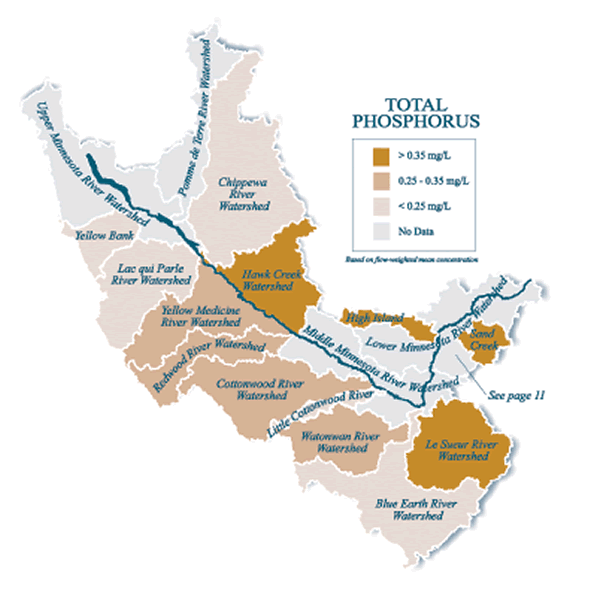
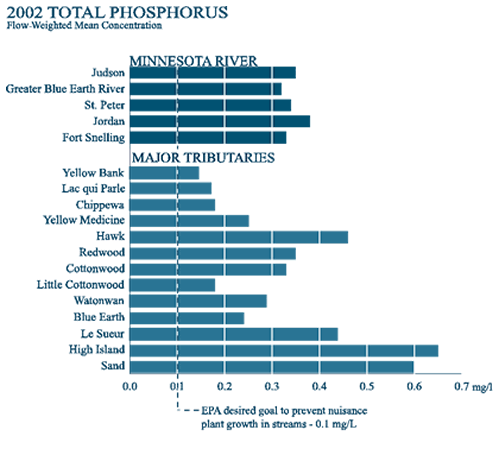
What is the status of phosphorus in the Minnesota River Basin?Low dissolved oxygen rates are of concern particularly during low-flow times or in slow-flowing areas such as reservoirs and the lower reaches of the Minnesota River. Large total phosphorus loads can have major impacts on downstream receiving waters such as Lake Pepin. The map and chart at right illustrate the total phosphorus levels in 2002 for selected Minnesota River Basin watersheds. The illustrations show flow-weighted mean concentrations (FWMC) of total phosphorus. This is equivalent to routing all of the flow that passed a monitoring site during a specific timeframe into a big, well-mixed pool, and collecting and analyzing one sample from the pool to give the average concentration. Total phosphorus is an issue in all major tributaries. During 2002, the bulk of total phosphorus loading from tributaries occurred in the watersheds located in the middle and lower Minnesota River Basin (i.e. downstream of Morton). Total phosphorus FWMC values in the Minnesota River mainstem, six major tributaries, and five minor tributaries were greater than 0.30 mg/L during 2002. These TP concentrations are well above the USEPA desired goal of 0.10 mg/L for preventing nuisance plant growth in streams (see chart). Because total phosphorus loading is strongly correlated with stream flow, year-to-year variability in runoff quantities explains much of the variability in TP loading. |
|
|||||||||
 |
||||||||||
|
References: |
||||||||||
| Back to pollutants For more information about other nutrients, see orthophophorus, nitrate-nitrogen. For more information about nitrate-N in the Minnesota River Basin, see publications. |
||||||||||
|
This page was last updated 9/15/04 |
||||||||||