| |
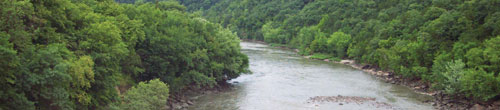
Our image of the river of ten years ago is different than it is today. Ten years ago, the river was more polluted than it is today. When I began working with the Friends 5 years ago, the office had a cartoon posted from the Minneapolis Star Tribune depicting the Minnesota River as a sewer. While there is still much to be done in terms of clean-up efforts, there has been great progress toward making the Minnesota River “fishable and swimmable.” In fact, more and more people are using the river for recreation. In ten years, I hope that we have reached our vision or goal of a completely fishable and swimmable Minnesota River.
There are actually two things that the Friends of the Minnesota Valley have been involved with that have contributed to helping restore the health of the Minnesota River. The first is the establishment of the Minnesota Valley National Wildlife Refuge, a critical piece of the public lands system that protects floodplain and other wildlife habitat in the Minnesota River Basin. The second effort with which the Friends have been involved that has contributed to restoring the health of the Minnesota River is the Minnesota River Conservation Reserve Enhancement Program (CREP), which enrolled 100,000 acres of marginal land in this conservation program.
Friends of the Minnesota Valley is a membership-based nonprofit conservation organization that is dedicated to conserving the natural resources of the Lower Minnesota River Watershed. As such, our greatest interest is in instilling a sense of ownership of the Minnesota River in the approximately 750,000 citizens living within the six-county area of the Lower Minnesota River Watershed. Citizen leaders are absolutely essential to the ultimate success of the broader Minnesota River clean-up effort. Obviously, it is also our goal to see measurable progress made toward achieving Minnesota River TMDL goals, and we can best promote this through cultivating citizen leaders throughout the watershed and the entire basin.
I do not believe that there is a sense of urgency about the health of the Minnesota River by the general public. I do believe that citizens understand that there is a problem with the condition of the river, and they understand that there are a variety of factors that contribute to its impaired condition. They also would like to see the Minnesota River cleaned up sooner rather than later. That was brought out by the public opinion poll completed in 2005 by the Minnesota Pollution Control Agency, the Friends, and Minnesota State University. However, there is still a certain sense of apathy, with people believing that the government (i.e. “others”) are working on clean-up efforts and that there is not a sense that it is a citizen’s personal responsibility to help fund improvement efforts. Friends of the Minnesota Valley is committed to educating citizens about the condition of the Minnesota River and our efforts and those of our partners to improve its condition. It is especially important that we provide opportunities for citizens to experience the river directly through on-river recreational opportunities.
The biggest challenge is that our organization is modestly-sized in terms of staff and budget. There are many activities that are equally important in terms of program work, but priorities must be made and resources funneled into program areas that bring the greatest benefits in cost-effective ways. Friends of the Minnesota Valley realizes that partnerships with other organizations are essential to our effectiveness and that pooling of financial and other resources are necessary to achieve results. Communication and collaboration are always important to any effort as
broad-based as that taking place in the Minnesota River Basin. Other challenges include pressures competing with conservation efforts, such as residential and other development in the urban portions of the Lower Minnesota River Watershed. Finding funding sources for priority projects can also be a challenge. Creating a sense of urgency with citizens in the watershed through outreach and education efforts (related to the fourth paragraph) and motivating those citizens to take action with elected officials, city staff, and so forth is always a challenge.
One of the greatest contributions we have made to water quality improvement in the Minnesota River Basin is the introduction of the Community Clean-Ups for Water Quality Program. The underlying concept of the Clean-Ups is that, by educating citizens on how their grass clippings and leaves, plus the sediment from rains and runoff, ends up on their streets, then makes its way into the city's storm sewer system and eventually into the river, we can show them how they can personally invest in cleanup efforts that measurably and significantly reduce phosphorus pollution of the Minnesota River and its watershed. Because the Clean-Ups are annual and are sponsored by local entities, the program leads to long-term ecological benefits and results.
As a related benefit, the program also provides cities with a tool that can help them meet mandates under the Clean Water Act. Friends of the Minnesota Valley recruits Clean-Up sponsors through our network of contacts and partners throughout the Lower Minnesota River Watershed. We provide tools such as bags, gloves, rakes and scales, and provide media promotion of the event. We work with city officials on collection and disposal, and we treat participants to a picnic at the conclusion of the Clean-Up. The program has been extremely successful since its inception four years ago. We have hosted thirteen Community Clean-Ups, resulting in the removal of 14,100 pounds of trash and 1,359 pounds of phosphorus (equal to 1,359,000 pounds of algae that did not get into the Minnesota River). We also have a clean-up videotape that has been distributed to area schools, and two school groups have already sponsored an event. The Clean-Ups have turned out many citizen volunteers, hinting at our tremendous future potential for the program. This year alone, at two Clean-Ups hosted with the Refuge, over 500 volunteers showed up for work.
Back to Minnesota River Stories
|