
Toxics in the Minnesota River Basin
 |
|||||
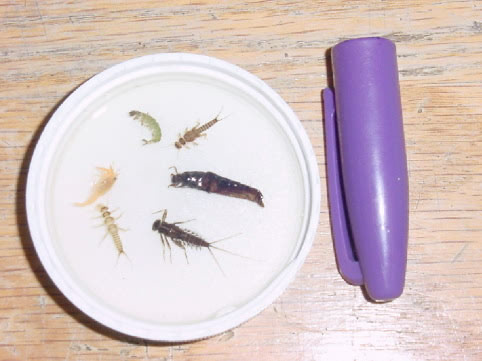 |
What are Toxics?Toxics are substances capable of causing injury, illness, or death by chemical means. "Toxic" is synonymous with "poison." Toxicity is a measure of the relative ability of a chemical to do biological harm. Many naturally occurring substances are toxic, such as elemental arsenic, mercury, and lead. Why are toxics important?Chemical contaminants in waterways can affect the growth, survival, and reproducibility of benthic organisms and impact human health. Benthic organisms, or macroinvertebrates, are animals without backbones that can be seen with the naked eye.They includes insects, crayfish, snails, mussels, clams, and fairy shrimp (see photo). |
||||
What is the status of toxics in the Minnesota River Basin?Toxics in the Minnesota River Basin include un-ionized ammonia, mercury, chloride, arsenic, cadmium, chromium, copper, lead, nickel, selenium, and zinc, as well as pesticides. Sources of toxics found in surface and groundwater include those that are natural such as native levels of mercury found in soils, as well as domestic sewage, industrial wastewater, and airborne toxics that are deposited on the landscape and subsequently washed into surface water or leached into the groundwater. Other sources include hazardous waste generators and sites, agricultural chemical facilities, pesticide applications, storage and treatment activities among many others. Monitoring data do not indicate the presence of major “hot spots” of toxic sources that are causing major environmental problems (Basin Information Document, 1997). References: State of the Minnesota River: 2002 Surface Water Quality Monitoring. 2003. Minnesota River: Basin Information Document. Minnesota Pollution Control Agency. November, 1997. MPCA Glossary - http://www.pca.state.mn.us/gloss/index.shtml http://community.turi.org/toxics/index.shtml |
|||||
|
This page was last updated 9/15/04 |
|||||