|
What are fecal coliform bacteria?
Fecal coliform are a group of bacteria found in the intestinal tract of humans and animals, and also found in soil. While harmless in themselves, coliform bacteria are commonly used as indicators of the presence of pathogenic organisms and other disease-causing bacteria. Fecal coliform bacteria are are measured in the number of bacteria per 100 milliliters of water.
What are E. coli bacteria?
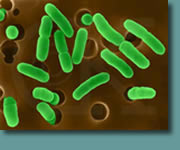
Escherichia coli, a subgroup of fecal coliform bacteria, is present in the intestinal tracts and feces of warm-blooded animals. Like fecal, it is also used as an indicator of the potential presence of pathogens. There are many different strains of E. coli that are classified into more than 170 subgroups. Although most strains of E. coli are harmless and live in the intestines of healthy humans and animals, some strains produce a powerful toxin and can cause severe illness.
Why are bacteria important?
The key concern with elevated fecal coliform bacteria levels in waterways is their association with disease-causing bacteria. Their presence indicates that the water has been contaminated with the fecal material of man or other animals and could contain pathogens or disease producing bacteria or viruses that can also exist in fecal material. Some waterborne pathogenic diseases include viral and bacterial gastroenteritis, hepatitis A, typhoid, and cholera. The most common illness associated with swimming and ingesting contaimated water is gastroenteritis which can cause nausea, vomiting, abdominal cramps, fever, headache and diarrhea. Potential sources of contamination typically include sewers, septic systems, feedlots, and animal yards.
What is the standard for bacteria?
The US EPA and State of Minnesota have established several standards. Fecal coliform levels have been used for decades as the prime indicator, but the E. coli level is now being phased in by most States at EPA's recommendation. Many water quality montoring groups are using both indicators during the transition.
Fecal coliform levels are used to indicate if water is safe for full-body human contact during water-related activities, such as swimming. The standard is based on health risks for individuals exposed to this water. Minnesota's water quality standard for fecal coliform bacteria is not more than 200 fecal coliform colonies per 100 milliliters. For more information, see MPCA's Guidance Manual for Assessing the Quality of Minnesota Surface Waters (pdf).
What is the status of bacteria in the Minnesota River Basin?
The Minnesota Rapid Assessment Project (MRAP) study found elevated fecal coliform bacteria levels throughout the river system. Numerous stream segments are listed on Minnesota Impaired Waters list (MPCA Impaired Waters Website) due to problems with elevated bacteria.
References:
State of the Minnesota River: 2002 Surface Water Quality Monitoring.
Minnesota River: Basin Information Document. Minnesota Pollution Control Agency. November, 1997.
Duluth Streams - http://www.duluthstreams.org/understanding/impact_bacteria.html
Minnesota Department of Health - http://www.health.state.mn.us/divs/eh/water/com/fs/coliform.html
MPCA Glossary - http://www.pca.state.mn.us/gloss/index.shtml
MPCA's Guidance Manual for Assessing the Quality of Minnesota Surface Waters (pdf)
MPCA Minnesota's Impaired Waters website - http://www.pca.state.mn.us/water/tmdl/index.html
E. coli photo courtesy of http://faculty.washington.edu/baneyx
|